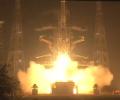
The Indian Space Research Organisation successfully launched its 100th mission on Wednesday, with a GSLV rocket carrying navigation satellite NVS-02.

In the first dedicated mission of its commercial arm New Space India Limited (NSIL), the Indian Space Research Organisation on Sunday successfully launched Brazil's earth observation satellite Amazonia-1 and 18 other co-passengers, including five built by students, onboard a Polar rocket from the spaceport in Sriharikota.

President Pranab Mukherjee on Monday congratulated space agency ISRO for the successful launch of rocket PSLV-C23, saying it is a significant milestone in the progress of the country's space capabilities.

In terms of success rate, the PSLV rocket has an enviable record of 57 successful missions out of 58 commercial ones.

The launch will be a major feat in country's space history as no exercise on this scale has been attempted before.

Other than the Cartosat-2 series satellite, the PSLV is carrying 29 nano satellites from 14 countries - Austria, Belgium, Chile, Czech Republic, Finland, France, Germany, Italy, Japan, Latvia, Lithuania, Slovakia, the United Kingdom and the United States of America besides a nano satellite from India.

Except Pakistan, seven SAARC countries are a part of the project.

India's launch preparations for the ambitious Rs 450 crore Mars orbiter mission achieved a major milestone with the successful thermo-vacuum test of the spacecraft with its payloads (scientific instruments).

The primary goal of HysIS, whose mission life is five years, is to study the earth's surface in visible near infrared and shortwave infrared regions of the electromagnetic spectrum.

Scientists of the Indian Space and Research Organisation have proved their mettle once again with the successful launch of India's very own space observatory , Astrosat.
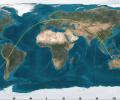
The Indian Space Research Organisation (ISRO) announced that the fourth edition of the PSLV Orbital platform Experiment Module (POEM-4), used for the space docking experiment mission, has successfully re-entered the Earth's atmosphere. The module, a repurposed spent upper stage of the Polar Satellite Launch Vehicle, impacted at 02:33 UTC (08:03 IST) on April 04, 2025, in the Indian Ocean. This successful re-entry signifies ISRO's commitment to mitigating space debris and contributing to the long-term sustainability of the outer space environment. POEM-4 had hosted 24 payloads during its mission life, yielding valuable science data. ISRO and the United States Space Command (USSPACECOM) closely monitored the module's orbit decay and predicted the re-entry date. This event showcases ISRO's proactive approach to responsible space operations.

Why did ISRO's workhorse Polar Satellite Launch Vehicle rocket fail during its 41st flight?

The space agency had earlier announced that the launch is tentatively scheduled at 09:28 hrs IST on November 25, subject to weather conditions.

The space agency launched 104 satellites, breaking the previous record of 37 by Russia.
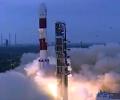
RESOURCESAT-2A, intended for resource monitoring, is a follow-on mission to RESOURCESAT-1 and RESOURCESAT-2, launched in 2003 and 2011 respectively. It is intended to continue the remote sensing data services to global users provided by RESOURCESAT-1 and 2.
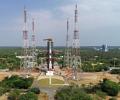
The Aditya-L1 mission carries seven scientific payloads to carry out the study.

This is the first mission by the Indian Speace Research Organisation this year.

ISRO has released the footage of the injection of PSLV-37 which launched a record 104 nano-satellites overseas customers into the orbit in blocks in a series of separations.

In a textbook mission, ISRO's PSLV-C32 lifted off from Sriharikota and later injected the IRNSS-IF in sub-Geosynchronous Transfer Orbit.

European instruments would be included on board India's mission to the moon, Chandrayaan-1, to be launched by India's Polar Satellite Launch Vehicle.
ISRO plans to launch 720-kg SPOT-6 remote sensing satellite from France (built by ASTRIUM SAS) and a 15-kg Japanese spacecraft Protiers on board the home-grown Polar Satellite Launch Vehicle (PSLV-C21) in the second week of September, in a major milestone of sorts.

ISRO chairman S Somanath said the success gave the space agency "greater confidence," as the GSLV will be next deployed in the NISAR mission, a collaborative effort with the US' NASA.
ISRO chairman G Madhavan Nair said Chandrayaan-2, to be undertaken by 2010, will have a proper lander, which would land on the lunar surface and try to explore the surface in far more detail.

Launched on September 23, 2009 using the Polar Satellite Launch Vehicle from Sriharikota, Oceansat-2; is designed to provide service continuity for operational users of the Ocean Colour Monitor (OCM) instrument on Oceansat-1. The agreement with the Indian Space Research Organisation will lead to the use of data from Oceansat-2 for various US agencies for research, education and other activities of public good, including weather forecasting.

In its first multi-orbital launch, India's workhorse PSLV will on Monday inject eight different satellites, including the country's weather satellite SCATSAT-1 and five from other nations, into two different orbits.
ISRO's Polar Satellite Launch Vehicle-C6, carrying India's remote sensing satellite CARTOSAT-1 and a micro satellite HAMSAT, blasted off from the Satish Dhawan Space Centre in Sriharikota on Thursday.

The Indian Space Research Organisation (ISRO) is set to welcome the new year with the launch of its first X-Ray Polarimeter Satellite that would offer insights into celestial objects like black holes, onboard a Polar Satellite Launch Vehicle rocket on Monday.

The mission life of the 2,250kg GSAT-7A, built by ISRO, is eight years. It will provide communication capability to users in Ku-band over the Indian region.

The Department of Space (DoS) plans to realise entirely-built rockets -- GSLV-Mk III and SSLV -- from Indian industry partners, in addition to PSLV, according to a top official of its commercial arm NSIL.

The Indian Space Research Organisation on Wednesday placed in orbit seven satellites including Oceansat-2 within a span of 20 minutes, its first successful mission after the abrupt end of the ambitious Chandrayaan-I project.
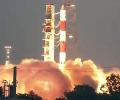
'There's too much coincidence in back-to-back failures of missions critical to national security.'
India on Friday moved a step closer to launch its maiden unmanned moon session when the lunar spacecraft Chandrayaan-I was mated with the polar rocket which is set to blast off on October 22 from the Sriharikota spaceport. Gearing up for the final countdown, Space officials said all operations for the mission are progressing satisfactorily and barring a cyclone threat the PSLV-C11 will keep the date with the country's historic mission on October 22.
The 44 metre tall four-stage PSLV placed Italian satellite AGILE into orbit at 550 km above the earth.

ISRO launched 12 Indian, 22 foreign satellites and successfully flight-tested India's first winged-body aerospace vehicle.

Indian Space Research Organisation's second mission of the year to place an earth observation satellite by a GSLV rocket faced a setback as the mission could not be accomplished fully due to performance anomaly in the cryogenic stage of the rocket, the space agency said on Thursday.
The Polar Satellite Launch Vehicle is carrying 1360-kg satellite 'Resourcesat -I'.

The successful orbiting of the satellites by the Polar Satellite Launch Vehicle PSLV C-40 comes four months after the Indian space Research Organisation's mission to launch backup navigation spacecraft IRNSS-1H onboard PSLV-39 ended in a rare failure.

India's Polar Satellite Launch Vehicle will lift off from Sriharikota on July 10 taking five foreign satellites into orbit, including three earth observation spacecraft whose imagery will be utilised by a Beijing-based company as well as an experimental nano-satellite that will deploy a large, light-weight sail in order to hasten its descent back to earth.
The 51-hour countdown for the 17th flight launch of Indian space agency's Polar Satellite Launch Vehicle PSLV-C 15 from Sriharikota spaceport is expected to begin on Saturday morning."The rocket will put into orbit five satellites remote sensing satellite Cartosat-2B from India, Alsat from Algeria, two nano satellites from Canada and Switzerland, and a pico (very small) satellite called Studsat built by 7 Indian engineering students.

The launch of Polar Satellite Launch Vehicle (PSLV-C52) is scheduled at 05:59 hours on Monday from the First Launch Pad of Satish Dhawan Space Centre, Sriharikota, the Bengaluru-headquartered space agency said.
